| Q |
How do I install REO voltage stabilisers? |
| A |
REO stabilisers are straightforward to install, but it does depend
on the power of the unit. Smaller units can be run directly from
a fused mains outlet, but larger units require their own mains live
feed from the distribution panel at the installation site.
|
| Q |
Is there any setup procedure which needs to be carried
out? |
| A |
No, all REO units are factory tested and calibrated to operate
at their rated voltage and current. Just connect the input and output
and switch ON! link to picture?
|
| Q |
What about maintenance? |
| A |
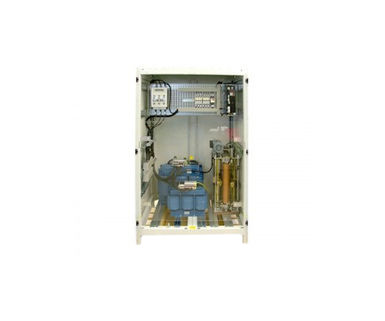
There are few moving parts in a REO Stabiliser. The majority of
REO units use a unique ROLLER BRUSH link to picture? This means
that maintenance is seldom required; however we do recommend that
the brush is annually inspected to ensure that it remains in good
condition.
|
| Q |
What input voltage will REO Voltage Stabilisers
accept? |
| A |
Basically all of our stabilisers accept a 230 V, 50 Hz input voltage
(or 3 x 400 V, 50 Hz) for three phase systems. The voltage tolerance
is +/- 15% of nominal, so for a 230 V system the acceptable input
is 195.5 V to 264.5 V
For this input range the output will remain at 230 V +/- 1.5%,
so that is 226.5 to 233.45 V
|
| Q |
What happen if the input voltage exceeds these limits? |
| A |
The unit will still work, but the output will not be regulated
to the 1.5% tolerance, but the output will be at least 15% better
than the input, so for a -20% mains dip, the output will only drop
by 5%.
|
| Q |
How do I specify REO Voltage Stabilisers? |
| A |
REO are aware that this can be difficult, which is why we have
attempted to make our range as easy to understand as possible.
The main design criterion that we need to know is the power, in
Watts (W) or Volt-Amps (VA) of the connected equipment,
or failing that an indication of the normal running current.
|
| Q |
How do REO Stabilisers actually work? |
| A |
Using transformer technology the stabilisers add or subtract voltage
from the mains supply, no electronics are involved in this power
transfer, so there is high efficiency and no detrimental effect
on the quality of the actual mains sinewave.
|
| Q |
My mains voltage is 110 V, 60 Hz |
| A |
No problem, your requirement is not a special and will
not be priced as such, but the power ratings are different for this
voltage and we choose not to complicate our ratings tables. Just
contact us with your voltage, frequency
and power and we will offer exactly what you need.
|
| Q |
What options are available? |
| A |
Anything you want! However standard options are:
 |
|
 |
Meters |
| |
|
Over/Under voltage alarms |
| |
|
RFI Frequency Filters |
| |
|
Surge/Spike suppression |
| |
|
By-pass switches |
| |
|
Additional circuit protection |
Just let us know what you require and
we will give you more details.
|
| Q |
The power rating that I require is not listed in
your table? |
| A |
No problem, the table shows a range of commonly used units, again
to prevent over complication we choose not to include every unit
we are capable of manufacturing. Suffice to say, if you want it
we will make it for you.
|
| Q |
My mains input fluctuates by +/- 20%, can you offer
something that will stabilise this? |
| A |
As explained above, REO units will not stop working just because
the voltage falls outside the standard input voltage range, however
constant running in this condition should be avoided.
We can offer units with extended input ranges, contact
us with your specific requirements.
|
| Q |
My three phase load is asymmetrical, will the REO
Stabiliser cope? |
| A |
Do you mean that the current drawn from each phase is different?
If so then, Yes the REO unit will work perfectly, provided that
the total current per phase is within the rated current of the unit.
|
| Q |
The individual phases of my three phase supply do
not fluctuate symmetrically, how will the REO unit manage? |
| A |
This is no problem; REO stabilisers are designed so that all three
phases are monitored and regulated separately, to ensure your load
receives the best possible supply.
|
| Q |
My load draw a large surge current at start-up,
will this cause a problem? |
| A |
The REO design is very robust and short term overloads, caused
by inductive loads, such as motors present on problem.
It is always helpful for us to know the load in advance, especially
if it is a little unusual, if in doubt, contact
us!
|
| Q |
The output from my motor-driven generator is unstable,
can I use a voltage stabiliser to solve this problem? |
| A |
In theory yes, in practice no! Unfortunately, most generators of
this type produce a very bad sine-wave which is difficult to accurately
monitor. This obviously presents a problem when we try and alter
the voltages. We can use different methods of monitoring in some
circumstances; contact us with details
of your application.
|